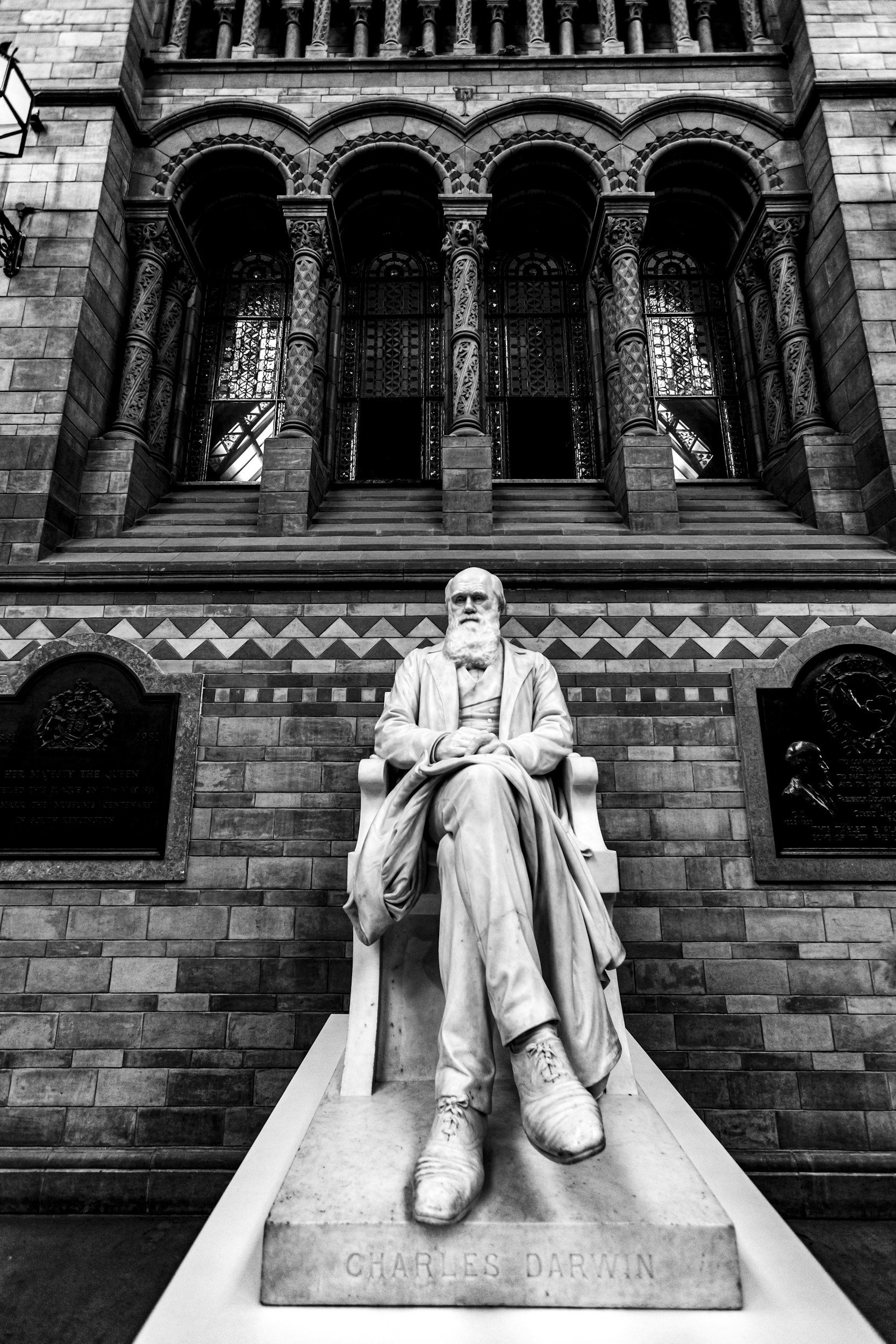
Sex Bias in the Age of Darwin
*
Sex Bias in the Age of Darwin *
Everything you thought you knew about modern biology generally tends to come from one man and his thoughts; that man was Charles Darwin. While Darwin was just one man, and the scientific community has been thinking and questioning the natural world for hundreds and thousands of years, his name seems to be the one that comes up over and over again.
Charles Darwin’s novel ‘Theory of Evolution’, was revolutionary - groundbreaking even, as it invalidated what was known in the scientific world at that time and challenged it to a whole new level. While he did contribute significant knowledge that is still taught and is accepted in today’s technologically advanced scientific community, there are some things that he appears to have gotten wrong… or at least not all the way correct (Cooke 2022).
Questioning the most famous scientist - the one that has been a household name for what feels like forever? Bold, I know, but stay with me here.
Well… Let's look into Darwin himself to get a better idea of the world in which he was involved in. He lived in a time, the Victorian era to be precise, in which there were certain gender and sex expectations around that time. One of which was for females of the human species; that they were expected to get married and produce children, and to obey their husbands. They were not, under law, seen as individuals, but as property of their husbands or fathers. Women were expected to be seen and not heard above all else, or they would be socially shunned.
So… that was the world Darwin was living in. Of course it makes sense that he applied that same logic to females in the animal kingdom. He called the female species (applying this logic to all females of all differing kinds of species) to be called ‘passive’ non-participating individuals in their lives (Cooke 2022). He appears to have disregarded their importance in other aspects of their ecology though. An example is how he claimed that females were ‘less eager’ in a variety of life activities, describing their behavior and intellectually as ‘inferior’ to their male counterparts (Cooke 2022).
He did famously give the female sex the important classification of choice. Darwin described female choice, specifically a female picking a mate based on his physical size, fitness, and potential to reproduce, as a crucial action in the process of natural selection. Ultimately, he goes on to describe how the choice the female sex makes plays a significant role in the reproductive success for the following generation. This theory was unheard of for that time and Darwin’s display of ‘female choice’ was controversial within the scientific community (Cooke 2022).
But, only certain words stuck with his readers regarding the female sex - mostly ‘passive.’ This word has stuck around for a long time - too long in fact. We live in 2026 now, not 1859. We know better than that now (or at least we should). Time and time again, numerous studies have revealed that the female sex, of so many species, are just as capable to choose what best suits their needs (Jones and Sheard 2023). They have the capacity to be intelligent, aggressive, and active participants in the throws of life; if not more than the average male (Cooke 2022).
All of this is not to criticize one of the most influential and foundational biologists in the course of history, but to provide context on how much the biological community still uses Darwin and his theories as the basis for their scientific studies. As they should. This man was instrumental to biology as it is today, especially in regards to his studies on finches. He was the first person credited to realize ‘speciation’ across the different islands in the Galapagos. This ultimately led to our modern day perception of how species, and mutations within genes, nearly spontaneously occur to make an individual better adapted to live and survive long enough to reproduce in their diverse habitats (Cooke 2022). Absolutely and unequivocally invaluable to the scientific community - no question about that.
Yet, despite his abundance of knowledge that he gave to the world, his biases still remain prevalent - forever influencing scientists in the generations after him. This is problematic for a multitude of reasons. Most significantly, it appears that Darwin’s teachings have led to the scientific omission of the female (Cooke 2022). The female sex, in so many taxonomic groups, are not as researched and represented in studies, as their male counterparts (Jones and Sheard 2023). Not only does this lack of research contribute to an overall lack of understanding of the female individual, but it also leads to a lack of protection for her down the line. This has been happening and continues to happen for so many species; especially seen in those of the mammalian class (Jones and Sheard 2023).
Not knowing so much about the sex of an animal that literally is responsible for creating and growing life within its womb is an act of choice, but whether it is known or not remains unclear. Could it do with the patriarchal society we have lived in for so many generations - not wanting (or willing) to allow the female individual to be recognized for their importance in the creation of life? I wonder.